
THE SECOND BREATH
An OPERATION: UNDEAD Story | Historical World War II Dark Fiction, Supernatural Thriller

You’ve met Jack Harper in 1975 — the older man with the bourbon, the books, the photographs, and the beast he’d lived with for 32 years. You’ve seen him in Lisbon in 1945, finding the woman he thought dead, the one person who understood what he’d become, alive, but who left him again. Now here’s where it started. Romania, October 1943.
The Second Breath, excerpted from the draft novel OPERATION: UNDEAD, is operational. Jack in combat, processing what’s happening, the only way he knows how. The man who sings along with Eagles songs and keeps a dusty photograph of that woman in a bloodwood frame doesn’t exist yet. This is the event—the action—that creates him. The version in the novel will differ; the crypt opening and this scene unfold in real time there.
Hoia Baciu, Romania — October 1943
Jack pressed his cheek to the stock of the M1903 Springfield and watched through the Unertl scope as Standartenführer Klaus Wagner fed on Pavel.
Not ate. Fed. The distinction mattered to the part of his brain still composing the after-action report for ‘Wild Bill’. The report no classification existed for because the OSS had not yet devised a category called: I opened a crypt and woke something that should have stayed buried.
Two hundred yards. Prone behind a fallen beech, the bark cold and rain-slick against his forearms. The Hoia Baciu swallowed sound the way mud swallowed shell casings. Everything went flat against the canopy, absorbed into wet pine and the black nothing between the trunks. October in the Carpathian foothills. The dark draped him with its wet wool weight.
Through the canopy, moonlight breached in patches. Enough to make out shapes. Wagner’s silhouette hunched over a smaller body pinned against one of the shepherd cairns the villagers wouldn’t pass after sunset. Jack couldn’t see the man’s face at this distance, in this light. Didn’t need to. He knew the jacket. Pavel, the partisan who’d guided them from Bucharest, who kissed a creased photograph of his wife and daughter every night before he slept. Captured last night when Wagner’s men scattered what was left of Jack’s local allies. Kept alive since. A food supply.
Pavel’s boots kicked through the underbrush. Then stopped.
Wagner lifted his head. Even in the broken moonlight, Jack could see the dark slick shine on his chin and collar. He’d seen the rest up close; details he couldn’t unsee. Three nights ago, when a dropped German flashlight had thrown hard, ground-level light across a scene no after-action report could ever describe. And three hours ago, in the strobe of muzzle flash during the firefight, when he’d watched the gash a round tore across Wagner’s cheek seal itself shut.
Three hours since the firefight. Three nights since the crypt. And Jack’s finger rested against the Springfield’s trigger guard. Not on it. Against it. A slight tilt of wrist and his Bulova A-11 showed he’d held this position for eleven minutes. His finger had not moved the quarter-inch required to fire. Yet.
“Jack.” Devel’s voice behind him, barely above breath. “Jack, we need to move.”
John Devel, ‘Lonely John’, lay four meters back in a shallow depression, his left arm bound tight against his ribs with his own belt. Shattered collarbone, broken fragments shoved into ridges formed under the flesh below his throat, a single shard breaking the skin. The crypt had done that. Six hundred pounds of stone flung outward like a man kicking off a bedsheet, and Devel had been in its path.
“Darro?” Jack asked, not taking his eye from the scope.
“Thirty meters east. Covering our six.” Devel shifted, and a grunt came through his teeth, low and involuntary. “He’s got four rounds left.”
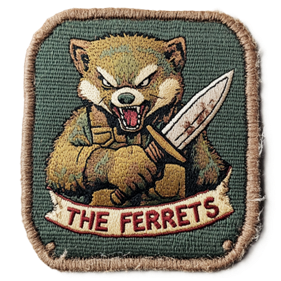
Four rounds of .45 ACP in Curran Darro’s M1911. Six rounds of .30-06 in Jack’s Springfield. The Browning Hi-Power FN GP35 on his hip had held thirteen rounds of 9mm — more than any standard sidearm carried. Empty now. Devel had only a Fairbairn-Sykes fighting knife and a shoulder that shouldn’t let him use it. Three men from OSS Special Operations Team F, The Ferrets, pinned in a Romanian forest with ten rounds between them.
Jack’s finger knew what his brain hadn’t filed yet. The rounds didn’t matter. He’d seen that proved.
The crypt. He kept coming back to it.
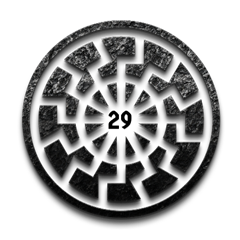
They’d found it on a pre-dawn reconnaissance sweep, deep into the mission. The structure built into a ridge at the forest’s northeastern edge, under a near full moon, looked like any other ruin until Devel scraped the moss off a door lintel and went quiet. The carvings beneath were old. Centuries. But the struts bolted across the entrance were not made of stone, iron, or any metal they recognized. Dark. Dense. Heavy. Heavier than steel, with runes cut into the surface in a script that predated anything in Devel’s five languages, though he thought the root forms looked Dacian or Thracian. Stamped over the top of it all, a steel plate, like a clerk’s afterthought: AHNENERBE: Site #29, with a symbol.
Devel had run his flashlight across the runes and then the German stamps, back and forth, reading the layers. “Something’s wrong here,” he’d said. “The Germans found it and decided not to open. We should do the same.”
Jack had felt the pull. The same one that had drawn him into his grandfather’s hidden attic room as a boy, the same hunger to learn what was kept locked away that had eaten at him since Danny disappeared into those Connecticut woods. The Hoia Baciu had a reputation that spanned centuries. Compasses swung wrong near its central clearing. Time slipped. Shifted. Villagers in the forest after dusk returned changed, or didn't return... or came out decades later, unchanged.
But Jack wanted to know what was inside that vault.
He’d ordered Devel to break the seal. Devel, darting a look at him, had set the pry bar against the first bracket and pulled. The dark metal didn’t give. He reset, put his back into it, muscles knotted, bulged, and Jack watched the bar bend before the bracket gave.
Devel was the strongest man Jack had ever served with, and that was saying something. ‘Lonely John’ was a dockworker’s son, but he’d never trained with weights. One of those details, Jack kept along with everything else he couldn’t explain. The bar created a gap; Devel got more purchase and leverage. The brackets came off one at a time—snapping free—each one harder than the last. Devel cursing in two of his five languages, the strange metal shrieking at the pry bar. Where the bar scored the surface, scraping away ages of patina, the metal beneath shone bright as polished silver. Devel had noticed it too, rubbing his thumb across the exposed streak. When the last bracket sheared, he said, “That metal. Those runes. Jack, this isn’t—”
The stone door didn’t open. It launched. In fragments that caught Devel across the chest and put him down. Collarbone. Snapped in pieces.
What came out of the dark moved wrong. Gray. Thin. It felt old… compressed into sinew and appetite. It cleared the crypt mouth before Jack’s hand found the Browning — past them, toward the tree line, gone into the murk.
Hunting Jack’s team through the forest, a Waffen-SS patrol had been closer than he’d been aware. The thing from the crypt met them as they stepped from the forest. Jack watched through the Unertl as one soldier — an officer — dropped a hooded Pertrix flashlight, and the beam rolled across the forest floor, casting hard, low light over a crimson hellscape that’d suit a church wall.
All eight rounds. Center mass. Three meters. The officer, sidearm drawn, emptying his Walther P38 into the thing. It didn’t stagger. Didn’t bleed. It caught the man by the throat with one hand, gray, long-fingered, the nails curved and dark as horn… and held him. His men scattered back into the forest. The screaming lasted too long. No man screams for that long. Jack counted the seconds run into minutes against his pulse. His training had no manual for this.
Then the flashlight died. The scene went black. When dawn came, the SS officer and the thing were gone. Curran had found a blood-soaked sheet of paper. Devel, through gritted teeth, translated. Standartenführer Klaus Wagner. Orders to command a Teilkommando—death squad—unit into the Hoia Baciu to eliminate Allied infiltration.
“He must have fucked up somewhere, somehow.” Devel had grunted that comment when he handed the bloody paper to him.
A Standartenführer commanding twenty men. Whatever Wagner had done to earn a colonel’s rank, he’d done something else to earn a punishment detail.
Before dawn, somewhere northeast, where the rest of Wagner’s Waffen-SS had scattered, voices had carried in German. Clipped. Frightened. An NCO trying to hold a perimeter against something his training had no procedure for. Then the screams.
OSS Bucharest’s—Fairchild’s—psyop. OPERATION: UNDEAD. Exploit the strigoi legends. Panic the local Volksdeutsche auxiliaries into desertion; put a kink in Nazi logistics in Romania. Plant bones in doorways. Smear pig’s blood on lintels. Theater. That plan, the easy blame for what happened. Nobody told the Hoia Baciu it was theater. And Fairchild hadn’t opened the crypt. Jack had.
Now Wagner was feeding on Jack’s people, and Catrina was gone.
She’d been with the team for six days before that. The local resistance contact, speaking English with Romanian consonants that rang like glass on glass. Jack hadn’t trusted her. Hadn’t stopped watching her either.
The morning after Jack rallied what was left of his team, she was gone. No note. No trace. Her absence and the faint scent of musk and jasmine where she’d slept.
Jack had filed it under desertion. A complication removed from a situation gone to hell.
Then last night, Wagner came. Changed. His men changed with him. They hit Jack’s camp after midnight and tore through the partisans. Father Mihai fled into the forest. Ioana — Jack didn’t know. Alive, dead, captured. He couldn’t confirm. Pavel, they’d taken. The man now pinned against the cairn with Wagner’s mouth on his throat.
Three hours ago, what was left of the Ferrets had engaged Wagner’s unit in a running firefight through the trees. In the strobe of muzzle flash, Jack had seen Wagner take a round across the cheek. Had watched the wound close, the skin knit itself shut between one flash and the next. Not a man. Not anymore.
He pulled back from the scope, pressed a cheek against the wet leaves. The forest’s cold crept through his field jacket, through his OD wool shirt, into the skin over his sternum.
Through the forest smell and his own, threaded a scent he knew.
Musk. Jasmine. The copper-thread of a taint he couldn’t name.
“Harper.”
Jack’s finger went to the Springfield’s trigger. He rolled onto his side, and she was there, six meters away between two beeches, in a position that put her directly in Darro’s sightline. Same dark wool trousers. Same leather jacket. Same boots caked with the Hoia Baciu’s black mud. Her hair pulled back hard from a face the moonlight wouldn’t hold. Shadows clung to her; a dark-aura shroud.
That force of presence recognized from his grandfather’s books. The old commentaries; the testaments. What angels looked like when they appeared to men. Not gentle. Terrible. Arriving with news that unmade everything that came before.
“Darro!” Jack looked past her, scanning east for his man’s position. Nothing moved.
“Unconscious. He’ll wake.” She moved closer.
“Where the hell have you been?”
“Tracking what came out of that crypt.” She crouched, knees wide, balanced on the balls of her feet. Too fast. Too controlled. A litheness training couldn’t account for. “I couldn’t—” She bit her lip. “I lost her.”
Her.
“Who are you? The truth this time.”
“Soratia Lupului.” She said it the way a soldier gives unit designation. “The Sisterhood of the Wolf. My people guarded that seal for six hundred years.”
What else did he not know about? How she’d moved through the forest without disturbing it. The things she knew about the Hoia Baciu that weren’t in any briefing. The eyes he’d thought were brown, at moments flared to embers. He’d begun to wonder more what she was than who.
“What was in there?” His grip on the Springfield relaxed. “That we—I—let out?”
“Sorin Basarab. The first vampire. She has been held by that seal since before the Ottomans crossed the Danube.” Catrina’s voice went flat. Precise. The register of casualty counts. “Your man broke metal not formed by human hands.”
Jack heard her question unasked. How? He looked at her eyes. Amber. Glowing from a source he couldn’t locate. Steady as a scope reticle. The same eyes that had watched their camp every night since she’d arrived.
“What? Like that movie from ‘36, Dracula’s Daughter?” He shook his head. Heard it land flat. His grandfather’s books had older explanations for what fed in the dark. Not movies. Not fiction. “She bit… Wagner.”
“She far predates Stoker’s Dracula. And every man she feeds on who survives will rise. Your rifle will not stop her or them. None of your weapons can.”
He’d watched Wagner put eight rounds into what came out of the crypt and then—after he’d been bitten—take a round to the face and heal.
“What will?”
Her tawny eyes held his. “Something equally not human.”
She reached inside her jacket. Brought out an object, compact, metallic. Jack raised the Springfield. His finger found the trigger guard, and then he registered it. A mirror. Oval, roughly eight inches, its frame dense with engravings that matched the runes on the crypt.
She held it flat between them. Its surface shimmered; an ebb and flow with eddies and whorls texturing its pale luminescence.
Jack pointed with the Springfield. “What is that?”
“What’s needed. The Oglinda Lupului.” Her eyes went to the clearing, toward Wagner and whatever he’d become in the dark. “I cannot do it alone. You must help.”
“And become ‘not human’… are you—” Jack shook his head, but he’d seen… Wagner. What he’d done. What he and his men had done.
“I’m telling you it is the only way to save your men.” She rubbed her wrist. “You will not like it.”
She extended her left hand. In the diffused gray light, Jack saw the scar on the inside of her lower forearm. Old. Dark seamed. Two crescents where fangs had closed on the vein. She let him see it. Let him put it together with the speed, the eyes, the nights of silent watching.
“What happens to me?”
“You become what I am. What my Sisterhood has been for six centuries.” She touched her collar where something metallic lay against her throat. “The bite begins it. The mirror—its stored full-moon essence—completes it.”
“And if I don’t?”
“Wagner and his men feed until dawn. Your men die. And, wherever she may be, Sorin Basarab finishes waking.”
Somewhere beyond the clearing, a man screamed. The sound cut short. Wet. Fast.
Jack scanned with the scope. At the clearing, he couldn’t see without it. At John Devel, four meters behind him, breathing shallow through a broken shoulder. At the dark, where Curran Darro lay unconscious with only four rounds that wouldn’t matter.
“We must hurry. Noaptea îi mănâncă,” Catrina said, “before the night eats them.”
Jack’s hands were steady. They’d been steady at Gela, at Salerno, at every drop zone and operation the OSS had sent him into since ‘42. Steady hands. The one gift.
He pulled back his sleeve; an uncertain offering.
Catrina changed. Moved. Faster than the crouch that had surprised him. Faster than anything Jack’s training could account for. Her mouth found the inside of his forearm, below the elbow, where the vein ran close. Not teeth. Longer than teeth. Sharper. The points found his skin with surgical precision.
Two punctures. Deep. His blood welled, and she drew on it. One pull. Two. Three. Released.
His arm burned. Not the wound. The blood itself, moving outward from the bite in a spreading heat that reached his shoulder in seconds, his chest in five, his legs in ten.
Jack pushed himself to his knees. The burn had reached the backs of his eyes. Catrina picked up the mirror. Angled it toward his face. Began speaking. The words guttural and rhythmic, older than the Romanian he’d heard in Bucharest, older than anything in the OSS phrasebooks. Her voice recalled the rhythm of a passage in one of his grandfather’s books, the harkening of angels. The mirror’s luminescence grew. Not light seen. Pressure felt. The stored moonlight hit his skin with physical weight, entered through his pores, and bonded with the furnace from the bite somewhere behind his sternum.
The two forces found each other.
Jack’s hands stopped being steady.
His fingers. Stretching. Thickening. Nails going dark. His field jacket split at the shoulders, seams giving up before the bones did. His vision blew open, and the dark forest went gray then silver, and every heat source within two hundred meters registered like tracers, and the blood-scent, Christ, not just Wagner but twelve, fifteen sources scattered through the trees, each one distinct, each one pulling—
Wagner. The blood from those orders still on his hands — he could smell it now, taste it, separate that signature from the rest. A single voice pulled from a crowd. And deeper, beneath the clearing, the oldest scent of all. Dry. Vast. Still. Sorin Basarab, stirring in whatever dark she’d retreated to; older than the seal Devel had broken.
His jaw. Cracking. Reshaping. He ran his tongue behind his lips and felt them. The points.
The Springfield lay on the ground where a man had dropped it. He couldn’t remember it slipping from his hands.
“Go,” Catrina said. “Before you forget why.”
Jack went.
Dawn
The Hoia Baciu’s first gray light found him on his knees in the clearing. The crypt’s broken stone lay where it had fallen. Not far from him, it gaped open. Dark. Silent.
Jack spat. Blood and gristle and something else. Tissue. Not his. The taste rank and gamy and utterly specific. His field jacket hung in strips from his shoulders. His hands, his again, the nails short, the fingers blunt and human-proportioned, but the blood under them black in the early light. Too much of it. The other changes not fully undone.
Strewn across the small clearing—he’d met the Nazis as they came to finish them—the remnants of the Waffen-SS unit. Not bodies. Pieces. Torn apart with a thoroughness that went beyond violence into something primal yet systematic. A dismembering his human mind could not remember performing, and his body could not stop tasting. He scanned the remains. Tried to find Wagner’s uniform. His insignia. His face. Couldn’t tell. The pieces didn’t assemble into anyone specific. The thing he’d become hadn’t cared.
He heard her before he saw her. The footsteps that barely displaced the leaves. She came from the east, from the ridge. Like she’d been there watching. Waiting to see if whatever came back from the killing would still be Jack Harper.
Catrina knelt in front of him. Knees in the blood-blackened grass. Her hands steady as his had been, once.
She reached to her own throat and unclasped a chain. Took his hand. His fingers flinched at the contact, but he didn’t pull away. She pressed the pendant into his palm. Silver. Shield-shaped. A wolf’s head over a moon, garnet eyes dark as dried blood. Heavy. Too heavy for its size. The same gleam he’d seen where Devel’s pry bar had scored the crypt brackets. Catrina’s touch had worn the dark patina to bare metal in the places she’d held it.
The metal stung where it contacted flesh. The cold drove inward, through the palm, up the forearm, into his chest, where it met the thing coiled behind his sternum. Pressed against it. The thing fought the pressure, clawed at it, and lost. The silver held.
He gasped. The world contracted. The heat signatures dimmed. The blood-rush faded from a roar to a whisper. His jaw ached, and the points behind his lips receded, not gone but sheathed, caged by the cold spreading through him.
“Lupii nu vor cunoaște sângele tău,” she said. The wolves shall not know your blood. “Wear it. Until you need what you are now.”
Jack looked at her. His vision still sharper than it should have been, the predator in him receding, the amber cooling. She knelt in the gore of the men he’d torn apart, and her face held no horror. No judgment. The attention of someone familiar with such carnage.
Angel wasn’t the right word. Angels don’t kneel in the mud and the blood. They don’t carry scars on their wrists. Then use their teeth to put the same in your arm. They don’t watch you become a monster and then come back to make sure you’re still in there; give you something of theirs to contain what you’ve become. What you had to become.
But it was the word that came.
A fallen angel.
Devel found them there. The shattered collarbone, mottled skin distended, his arm held in place with the belt, feverish, his good hand gripping the Fairbairn-Sykes he hadn’t used. He took in the clearing, the torn uniforms, the scattered parts, the blood-soaked ground, and his lips moved silently. Jack had seen that look once before, on a beach in Sicily, when they’d come across what the Hermann Göring Division had left of a village, its people. Devel cataloging. Filing. Building the room in his memory where he’d store what could not be spoken.
He stopped six feet from Jack. His eyes went from the wreckage to Catrina, kneeling, her hand still on Jack’s. To the pendant in Jack’s palm. His good hand sheathed the knife and went to the back of his neck, the gesture he made when his five languages couldn’t find the right word. Then his eyes went to the crypt. The crypt he’d opened because Jack told him to.
“Christ, Jack. What—”
“Don’t.” Jack’s voice came out raw. Scraped. His throat had been used for sounds no human vocal cords were built for. He looked at his hands. At what was under the nails. “Don’t ask me what happened.”
Catrina stood. Stepped back. She looked at Devel the way she’d studied Jack that first night at the base camp. Assessing what he could handle. Then she gestured toward the crypt.
“Eight hundred forty-three years the seals bound her.” Her voice was quiet. Not for effect. For the weight of the number. “My Sisterhood has patrolled this forest, monitored her vault, for the last six hundred years. The seals held for over eight centuries. Your man,” her eyes cut at Devel, “broke them in twenty minutes.” She looked at Jack, that question still unasked, then at the clearing full of what he’d done. “A doua suflare.” The second breath, when the dead breathe again. “Sorin Basarab’s. Wagner’s.” Her eyes held his. “Yours.”
Devel’s face went white. His hand dropped from his neck.
“She’s still in the forest,” Catrina said. “She can’t leave it. Not yet. But that won’t hold.”
Darro appeared at the tree line, conscious, a splotch of blood on his brow, dazed, his M1911 still in his grip. He took one look at the clearing and turned to vomit against a beech trunk.
The mirror in Catrina’s hands; its surface dark now, the stored moonlight spent. A dead instrument. Seemingly ordinary. She stepped closer and handed it to him.
“You must keep it. This war is not over.”
He looked at Catrina. She locked eyes with him. The amber had faded to the dark brown he’d seen every night at the base camp, the eyes that had watched and known far more than she revealed. And told him too late what he should have left alone.
Jack held the mirror, wanting to give it back to her, but a stirring inside stopped him. “When we found the crypt, did you know this would happen?”
“You should not have been able to open it.”
Jack closed the mirror inside his field jacket’s one surviving pocket and got to his feet. His knees buckled, caught. He stood. The pendant hung against his chest. He pressed it, the stinging chill constant. Caging what was inside. Not killing it.
Devel surveyed him. Darro retched again. Both alive. The forest held its silence.
The taste would not go away.
May I know where can I read your stories?